



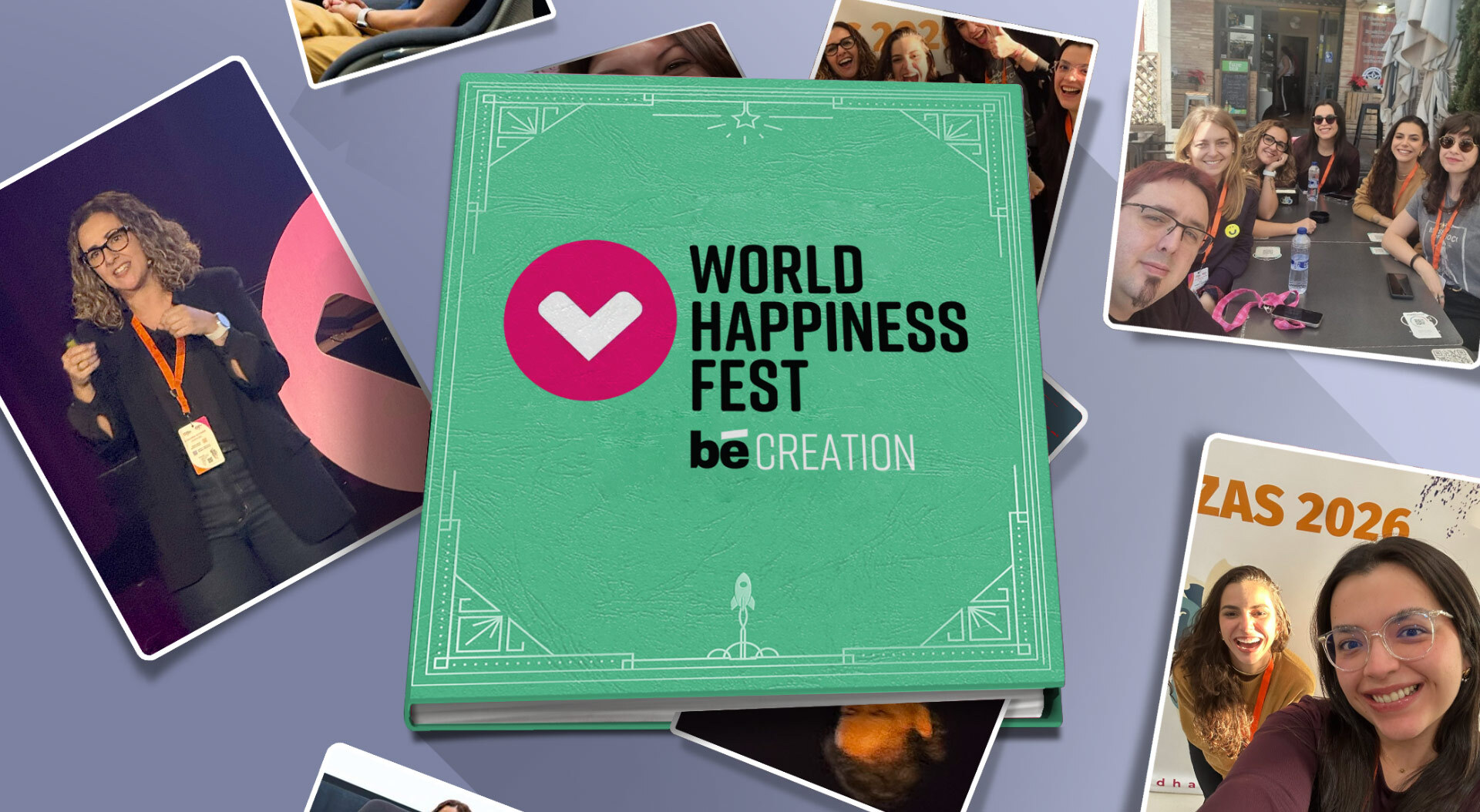
This March, Las Rozas became the global epicenter of… happiness?
I had the opportunity to attend the opening day of the World Happiness Festival, focused on organizational well-being, where business leaders, change agents, and international experts discussed this topic. I came away with a very positive realization: “happiness” (well-being) at work has stopped being a human resources utopia and has become a non-negotiable strategic pillar.
The days when well-being meant putting out fruit in the office and a foosball table are long gone. What we saw in this year’s roundtables and fast talks reflects real corporate maturity. One of those fast talks was given by Pat Iglesias, our incredible Director of People, who spoke about how unacknowledged fear becomes a chain that undermines well-being in any organization—and how poor leadership is not necessarily the result of “bad people,” but rather fears and insecurities that, when addressed, can create safe spaces for organizations to grow.
In addition to this, there were two talks that stood out during my time at the festival. On one hand, a talk by Julio de la Iglesia (Explosive Ordnance Disposal Specialist), which focused on fear management. He emphasized that fear is not a weakness, but a necessary emotion that alerts us to danger—and that courage is not the absence of fear, but the ability to act despite it. On the other hand, a session by Víctor Küppers, who, with a clear and direct approach, reminded us of the importance of returning to basics and focusing on what truly matters in order to live (and work) with joy—the importance of mindset and our responsibility in navigating contexts of change and uncertainty.
At this event, it was clear that the conversation around well-being in organizations is now technical and in-depth: we talk about psychological safety, new forms of leadership, bidirectional communication, measurable diagnostic tools, and ongoing monitoring to act with precision. It is no longer about using “a great work environment” as a recruitment slogan, but about seriously attracting and retaining talent with structure, tools, and knowledge in a market that does not tolerate toxicity.
However, amid all the structure and solutions provided by companies, I came away with a personal reflection that I think we sometimes overlook: what are we, as employees, doing to make this work?
An organization can design the perfect stage, but if the actors don’t want to step onto it, the show falls apart. The company has the obligation to create the space, but we have the responsibility to occupy it. For this new paradigm to be effective from within teams, we must work on several individual pillars:
I conclude, then, that happiness at work is not about ignoring problems under the rug of false positivity, but about building together a real, livable environment. It is a coordinated effort between leadership, which provides the means, and employees, who choose to embrace them with responsibility and trust. Striving to make well-being, once and for all, a collective endeavor to work—and live—better.
Subscribe to our newsletter
Important Security Notice
Beware of scammers impersonating Techsoulogy brand
We have identified fraudulent activities where malicious actors are imitating Techsoulogy assets. These scams may compromise your security.
⚠️ Warning: The URL you came from has been flagged as potentially harmful.
To stay safe, only trust communications and services from the official Techsoulogy domain: techsoulogy.com